

Low temperature technology of high-purity helium gas in spacecraft and satellites
Helium, high-purity helium
What is low-temperature technology?
Low temperature studies the production and behavior of materials at extremely low temperatures. The temperature range of high-purity helium and other low-temperature liquids is between -271.15 ° C and -196 ° C. Low temperature applications utilize characteristics such as increased strength, improved conductivity, and enhanced insulation in these low-temperature environments.
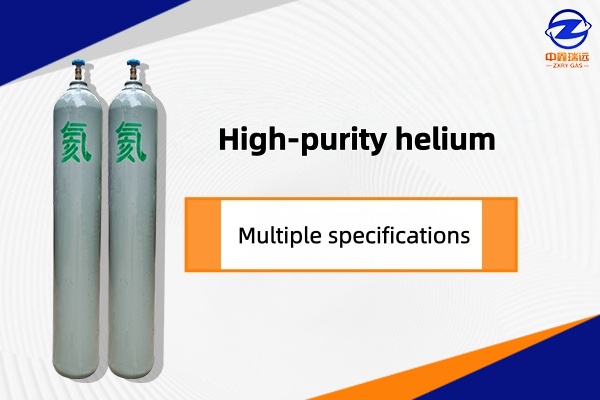
Buy high-purity helium and find Wuhan Yisi Tuopu Technology Co., Ltd. Click on the online inquiry or call our hotline at+86 189 8614 9031.
The principle behind low-temperature technology involves controlling the cooling rate. This is achieved by utilizing boiling point and evaporation rate to achieve the desired temperature range. In some cases, this involves using mechanical refrigerants or even liquid nitrogen to rapidly cool the material to below zero degrees. By manipulating the environment, materials can be cooled below room temperature without changing their physical state from solid to liquid.
However, not all materials will react the same when exposed to extreme cold conditions. For example, no matter how far it is cooled, high-purity helium remains a gas, while water turns into ice at 0 ° C. Understanding the unique characteristics of each material at different temperatures helps scientists determine which substances are most suitable for specific low-temperature applications.
Low temperature technology has been used in spacecraft and satellites to achieve efficient operation.
Low temperature technology is used for space applications because it allows for the storage of propellants at lower temperatures and reduces their vapor pressure. Low temperature fuel also provides a higher specific impulse than chemical fuel, thereby extending the duration of the mission. Low temperature propellant tanks are lightweight and have a low coefficient of thermal expansion. This allows them to store more fuel on board.
Spacecraft using low-temperature technology have an insulated inner tank containing liquid hydrogen or liquid oxygen, with a temperature maintained between -253 ° C and -183 ° C. To maintain this temperature, install multi-layer insulation (MLI) blankets and other insulation layers around the container wall. This can prevent heat from dissipating from the external environment into it. These systems can use active cooling mechanisms such as radiators or Joule Thomson coolers to further control their temperature.
Due to its high power density compared to other types of fuel sources, satellites widely use low-temperature technology during operation. In order to maintain their functionality throughout the mission, satellites require continuous power supply, which is provided by solar panels or radioactive isotope thermoelectric generators (RTGs). RTG requires liquid hydrogen stored in highly insulated containers to generate electrical energy. Therefore, satellite operators must heavily rely on low-temperature technology to ensure long-term uninterrupted performance.
In recent years, progress has been made in improving the efficiency of low-temperature technology in spacecraft and satellites. With these advancements, we are likely to see higher levels of efficiency improvement achieved through increased productivity.