

Safety conditions for operating high-purity helium gas cylinders
Helium, high-purity helium
Buy high-purity helium and find Wuhan Yisi Tuopu Technology Co., Ltd. Click on the online inquiry or call our hotline at+86 189 8614 9031.
The pressure is usually 15MPa. Before use, YQY-12 or 152IN-125 pressure reducers should be used to reduce pressure. Before use, soap water should be used to detect leaks in the gas pipeline to ensure that there are no leaks in the gas pipeline.
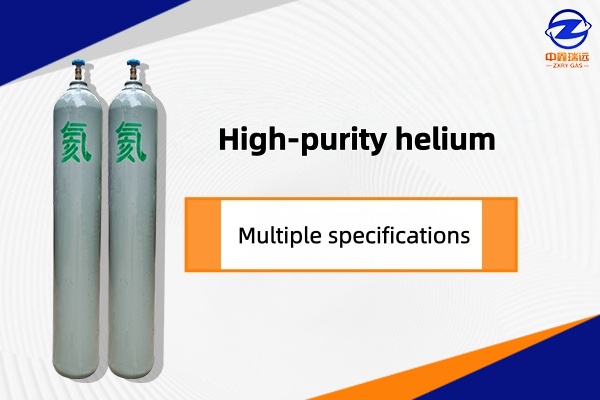
2. Ensure that high-purity helium gas does not leak and that the workplace is well ventilated. When the content of high-purity helium gas increases and the oxygen content drops below 19.5%, patients will first experience shortness of breath, lack of concentration, and ataxia; Subsequently, fatigue, weakness, restlessness, nausea, vomiting, coma, spasms, and even death may occur.
3. When using the end gas, the residual pressure inside each bottle of high-purity helium should be maintained at 0.5 MPa, with a minimum of 0.25 MPa. The bottle valve must be closed to ensure gas quality and safe use.
4. Bottles of high-purity helium should be classified and stacked during transportation, storage, and use, and should not be placed near open flames or heat sources. It should be kept away from flames, oil, and wax, exposed to sunlight, violently thrown, and electrocuted. It is strictly prohibited to shoot arrows or bow on the bottle shell, and rough loading and unloading are strictly prohibited. The short distance movement of high-purity helium cylinders should be carried out by dedicated cylinder trucks, while the long distance movement of cylinders should be carried out by dangerous goods transport vehicles. The temperature of liquid helium is 4.25K, and contact with the skin can cause severe frostbite.
5. The use and inspection of steel cylinders storing high-purity helium gas shall comply with the provisions of the "Gas Cylinder Safety Supervision Regulations" of the national quality and technical supervision agency, and the inflation pressure of the gas cylinder shall not exceed the prescribed pressure. Safety helmets should always be equipped with gas protection valves. Gas cylinders should be inspected every three years (except in special circumstances) for appearance and hydraulic testing. Only after passing the test can it continue to be used. The inspection should be carried out on the pump device.