

Helium He Chemical Safety Data Sheet MSDS
Helium, high-purity helium
Helium, high-purity helium, 99.999% helium, high-purity gas
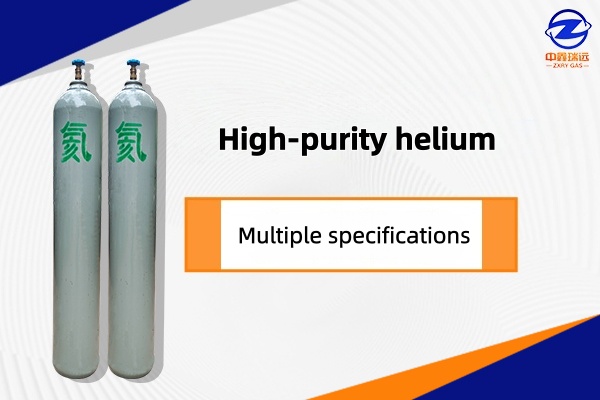
Buy high-purity helium and find Wuhan Yisi Tuopu Technology Co., Ltd. Click on the online inquiry or call our hotline at+86 189 8614 9031.
Part 1: Chemical Name
1.1 Chinese name of chemical: Helium MSDS
1.2 Chemical English name: helium
1.3 Molecular formula: He
1.4 Molecular weight: 4.00
Part 2: Composition/Composition Information
2.1 Main components: No data available
2.2 Content: High purity ≥ 99.999%; Level 1 ≥ 99.995%; Level 2 ≥ 99.99%.
2.3 CAS No. 7440-59-7
Part Three: Overview of Hazards
3.1 Hazard category: 2.2 Non combustible gases (including combustion supporting gases)
3.2 Invasion routes: inhalation, ingestion, transdermal absorption
3.3 Health hazards: This product is an inert gas, and at high concentrations, it can cause a decrease in oxygen partial pressure and pose a risk of suffocation. When the concentration of helium in the air increases, patients first experience accelerated breathing, lack of concentration, and ataxia; Subsequently, fatigue, weakness, restlessness, nausea, vomiting, coma, convulsions, and death occurred.
Part Four: First Aid Measures
4.1 Skin contact: No data available
4.2 Eye contact: No data available
4.3 Inhalation: Quickly leave the scene and move to a place with fresh air. Keep the respiratory tract unobstructed. If breathing is difficult, administer oxygen. If breathing stops, immediately perform artificial respiration. Seek medical attention.
4.4 Ingestion: Meaningless
Part 5: Fire Protection Measures
5.1 Hazardous characteristics: In the event of high heat, the pressure inside the container increases, posing a risk of cracking and explosion.
5.2 Harmful combustion products: None
5.3 Fire extinguishing method: This product is non flammable. Try to move the container from the fire scene to an open area as much as possible. Spray water to keep the fire container cool until the fire is extinguished.
Part 6: Emergency Response to Leakage
6.1 Emergency response: Quickly evacuate personnel from the contaminated area to a upwind location, isolate them, and strictly restrict their entry and exit. It is recommended that emergency personnel wear self-contained positive pressure respirators and general work clothes. Cut off the leakage source as much as possible. Reasonable ventilation to accelerate diffusion. If possible, use immediately. Leakage containers should be properly handled, repaired, and inspected before use.
Part 7: Handling and Storage
7.1 Precautions for operation: Do not pull, roll or slide the steel cylinder. Use a suitable handcart to move the gas cylinder, and do not attempt to grab the lid of the cylinder to lift it. Ensure that the gas cylinder remains in a fixed state throughout the entire process of use. Use a pressure reducing regulating valve or an independent control valve to safely release gas from the cylinder. Use a one-way valve to prevent backflow. Do not heat the gas cylinder to increase pressure and discharge volume. Carefully open the cylinder valve when connecting the cylinder to the process. If the user has difficulty operating the gas cylinder valve, stop using it and contact the supplier. Do not insert tools (such as wrenches, screwdrivers, sleds, etc.) into the valve cover. Otherwise, it may damage the valve and cause leakage. An adjustable ring chain wrench (StrapWrench) should be used to open the over tight bottle cap. Indeed, labels for actual, in use, and residual cylinders are used to distinguish the usage status of steel cylinders. To prevent air from entering the cylinder, do not completely exhaust the gas. After use, use a torque wrench to lock the valve outlet cover (PLUG) back in place. Special attention should be paid to the use of this gas in confined spaces.
7.2 Storage precautions: Store in a cool and ventilated warehouse. Stay away from sources of fire and heat. The storage temperature should not exceed 30 ℃. It should be stored separately from flammable materials and avoid mixing storage. The storage area should be equipped with emergency response equipment for leaks.
Part 8: Contact Control/Personal Protection
8.1 Occupational exposure limit: No data available
8.2 Monitoring method: No data available
8.3 Engineering control: Closed operation. Provide good natural ventilation conditions.
8.4 Respiratory protection: Generally, no special protection is required. When the oxygen concentration in the workplace air is below 18%, air respirators, oxygen respirators, or long tube masks must be worn.
8.5 Eye protection: Generally, no special protection is required.
8.6 Body protection: Wear general work clothes.
8.7 Hand protection: Wear general work protective gloves.
8.8 Other protections: Avoid inhaling high concentrations. Entry into tanks, confined spaces, or other high concentration areas for work must be supervised by someone.
Part 9: Physical and Chemical Characteristics
9.1 Appearance and Characteristics: Colorless and odorless inert gas.
9.2 Melting point (° C): -272.1
9.3 Boiling point (° C): -268.9
9.4 Relative density of liquid alkali: no data available
9.5 Vapor Density (Air=1): 0.14
9.6 Saturated vapor pressure (kPa): 202.64 (-268 ℃)
9.7 Combustion heat (kJ/mol): meaningless
9.8 Critical temperature (° C): -267.9
9.9 Critical pressure (MPa): 0.23
9.10 Octanol/Water Partition Coefficient: No data available
9.11 Ignition temperature (° C): meaningless
9.12 Flash point (° C): meaningless
9.13 Explosion upper limit% (V/V): meaningless
9.14 Lower explosive limit% (V/V): meaningless
9.15 Solubility: Insoluble in water and ethanol.
9.16 Main use: Used for inflating balloons, thermometers, electronic tubes, diving suits, etc.
Part 10: Stability and Reactivity
10.1 Stability: Stable
10.2 Taboos: None
10.3 Conditions for avoiding contact: No information available
10.4 Aggregation hazards: No data available
10.5 Decomposition products: No information available
Part 11: Toxicological Data
11.1 Acute toxicity: No data available
11.2 Subacute and chronic toxicity: No data available
11.3 Irritability: No data available
Part 12: Ecological Data
12.1 Ecotoxicity toxicity: No data available
12.2 Biodegradability: No data available
12.3 Non biodegradability: No data available
12.4 Bioaccumulation or Bioaccumulation: No data available
12.5 Other harmful effects: No information available
Part 13: Disposal of Waste
13.1 Waste nature: No information available
13.2 Disposal methods: Before disposal, relevant national and local regulations should be consulted. The exhaust gas is directly discharged into the atmosphere.
13.3 Disposal precautions: In case of emergency: In a well ventilated area or outdoors, fix the steel cylinder and slowly release the gas into the atmosphere.
Part 14: Transportation Information
14.1 Dangerous Goods Number: 22007
UN number: 1046
14.3 Packaging label: Class III packaging
14.4 Packaging category: O53
14.5 Packaging method: Steel gas cylinder; Ordinary wooden box outside the ampoule bottle.
14.6 Transportation precautions: No information available
Part 15: Regulatory Information
Regulatory information: Regulations on the Safety Management of Hazardous Chemicals (State Council Order No. 344 of the People's Republic of China) Implementation Rules for the Regulations on the Safety Management of Hazardous Chemicals (Hua Lao Fa [1992] No. 677) Regulations on the Safe Use of Chemicals in the Workplace ([1996] Labor Department Fa No. 423) Regulations on the Safety Management of Hazardous Chemicals (issued by the State Council on February 17, 1987), which provide corresponding provisions for the safe production, use, storage, transportation, loading and unloading of hazardous chemicals. According to the Classification and Labelling of Hazardous Chemicals (GB13690-92), it is classified as a non combustible gas in section 2.2
Part 16: Other Information
16.1 Reference: None
16.2 Other information: No data available