

The application principle of liquid helium and liquid nitrogen in superconducting technology
Liquid helium, helium gas
At the temperature of liquid helium and liquid nitrogen, conductors lose resistance, current does not generate heat and losses, and can continue to flow for several years, forming "superconductivity". It is known as low-temperature superconducting technology at liquid helium temperature and high-temperature superconducting technology at liquid nitrogen temperature.
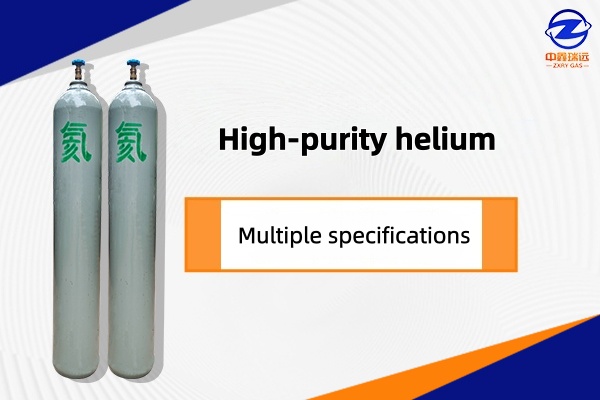
Buy high-purity helium and find Wuhan Yisi Tuopu Technology Co., Ltd. Click on the online inquiry or call our hotline at+86 189 8614 9031.
Magnetic fluid generators can be manufactured using superconducting magnets. In addition, there are superconducting energy storage devices and superconducting high-speed spring pulleys. For example, Southwest Jiaotong University has successfully developed a liquid nitrogen high-temperature superconducting suspension train with a maximum suspension weight of 700 kilograms, which can carry 4 people at liquid nitrogen temperature. Superconducting cable.
A new type of superconducting high-temperature power transformer has been launched. It uses liquid nitrogen instead of insulating oil, and its performance is 15 times that of the world's first high-temperature superconducting power transformer launched in March 1997. The transformer is jointly produced by French power company and ABB, with a power of 10MVA. It was put into use in 2000. We will prepare a standard 30MVA transformer in the future.
The key to this technology is to use economically efficient and environmentally friendly liquid nitrogen instead of insulating oil used in copper coils of power transformers. In this way, the occurrence of fires can be eliminated, the risk of spills can be eliminated, and insurance costs can be reduced; Transformers can be installed near large load centers or in these locations in large cities. This type of transformer has low energy loss, can reduce emissions, improve factory efficiency, and lower total cost of ownership.