

What is the price of helium?
Helium High purity helium
What is the price of helium? Helium price list! Wuhan Yisituopu Technology Co., Ltd. provides free access to the latest helium, high-purity helium, ultra-pure helium, and imported helium prices.
Helium price, how much is high-purity helium? Wuhan Yisituopu Technology Co., Ltd. is a large-scale helium supplier, reserve dealer, and wholesale supplier in China, with years of independent import and export rights and long-term large-scale helium imports. It has passed ISO9001 international quality system certification. For helium purchases, free shipping is provided. If you are looking for high-purity helium, please contact Wuhan Yisituopu Technology Co., Ltd. Click for online inquiry or call our hotline: +86 189 8614 9031.
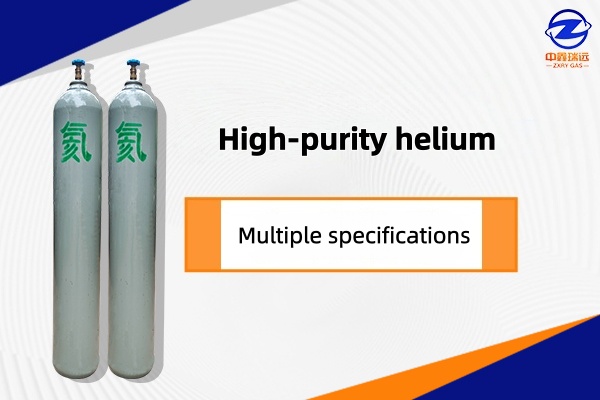
Wuhan Yisituopu Technology Co., Ltd. specializes in supplying various purity levels of helium, including 99.9% helium, 99.999% (5N) high-purity helium, 99.9995% (5.5N) high-purity helium, and 99.9999% (6N) ultra-high-purity helium. We offer helium in various packaging options, including 4L, 8L, 10L, 40L, and 44L cylinders, as well as bundled cylinders for tanker trucks and tank cars. We are willing to work with you to create a better future. If you are looking for high-purity helium, look no further than Wuhan Yisituopu Technology Co., Ltd. Click to inquire online or call our hotline: +86 189 8614 9031
Wuhan Yisituopu Technology Co., Ltd. offers the cheapest helium price. Equipped with a modern gas filling line, the company has the capability to fill 600,000 bottles of various gases annually. To facilitate our customers, we provide free door-to-door helium delivery. Just one phone call, and the goods will be delivered to you as scheduled.
Heliox, a low-density gas produced by mixing helium and oxygen in a specific ratio, facilitates oxygen passage through narrow respiratory tracts due to its physical characteristic of low density. It offers numerous advantages, including reduced respiratory tract resistance, alleviated respiratory muscle fatigue, and improved oxygenation status for patients. With a history spanning over 70 years, the application of heliox in various respiratory diseases has gradually garnered attention from scholars abroad, particularly in the realm of pediatric respiratory diseases.
Heliox has long been used as a gas for deep-sea shallow water activities and is also commonly used in the treatment of acute and chronic obstructive respiratory disorders on the physical therapy bed. In helium-oxygen mixtures, helium has a small molecular weight and low respiratory resistance, and it does not have anesthetic effects. Helium is an inert gas that rarely reacts chemically with other substances in the human body.
As early as 1919, Thomson proposed that helium would be the most suitable substitute for nitrogen as a breathing medium for divers to overcome nitrogen narcosis; he also predicted that substituting helium for nitrogen could increase the diving depth by 50%. In 1925, Yant successfully used helium-oxygen mixtures for coal miners working in tunnels. During this period, multiple submarine accidents that sank at the limit depth of air diving prompted the US Navy to conduct experimental research and train divers using helium-oxygen mixtures at the Washington Diving Laboratory from 1927 onwards.
In 1939, the USN's new submarine "Squalus" sank 74 meters below the surface of the North Atlantic due to a malfunction in its air intake valve, with 33 people still alive inside. During this rescue operation, helium-oxygen technology was first applied in practical diving. This also provided a strong impetus for the future development of helium-oxygen diving.
Since the formal application of helium-oxygen mixtures as breathing gases in high-pressure environments, extensive practice over the past 40 years has proven that, with appropriate oxygen partial pressure, the main purpose of using helium-oxygen mixtures for diving is to prevent nitrogen narcosis and increase diving depth.
Therefore, helium-oxygen mixtures are generally used in depth ranges where nitrogen narcosis is prone to occur during air diving, that is, depths greater than 60 meters. In special cases, helium-oxygen mixtures are also used at depths shallower than 60 meters for precise underwater operations.
Heavy helium-oxygen diving is used within a range of 60~200m, with a common operating depth limit of around 120m. For light helium-oxygen diving, if self-contained air supply is used for free diving underwater, the maximum diving depth is limited to 40~60m due to factors such as air supply volume;
If the diving method is changed to surface air supply for fixed-point diving, the depth can be increased, but it is necessary to "drag" this very long air supply hose. Therefore, helium-oxygen light diving often adopts the "umbilical cord" diving method.
When conducting this type of diving, the diver enters the diving bell, descends to the predetermined depth via the diving bell, puts on a helium-oxygen light diving equipment inside the bell, and adjusts the pressure inside the bell to equal the external water pressure. After that, the diver exits the bell and enters the water for activities. The helium-oxygen mixed gas used is supplied from the gas cylinder inside the diving bell through a pipeline.
This not only frees divers from the constraints of air supply time as with self-contained air supply, but also avoids dragging long hoses; at the same time, the "umbilical cord" connecting the diving bell and the diver facilitates the diver's orientation underwater. To date, the maximum depth of non-pressure diving that humans can reach is mostly achieved through this method of diving.
Bronchiolitis is the most common disease in children, among which acute viral bronchiolitis is the most prevalent lower respiratory tract infectious disease in children. In 1998, Hollman first treated patients with worsening bronchiolitis with helium-oxygen mixture, and the clinical scores of the patients improved.
Martinon-Torresy's study on patients with bronchiolitis in pediatric intensive care units found that inhaling helium-oxygen mixture through a mask could significantly improve clinical scores and reduce hospitalization time by more than 1 day. Cambonie's study found that for infants less than 3 months old with severe bronchiolitis, inhaling helium-oxygen mixture significantly reduced the use of auxiliary ventilators and wheezing.
Recently, in the Martinon-Torres study, patients achieved good results by inhaling helium-oxygen mixtures through nasal catheters, with significant improvements in clinical scores and carbon dioxide accumulation. Unlike the use of helium-oxygen mixtures for nebulized treatment of acute asthma, there are relatively few studies on the treatment of bronchiolitis with helium-oxygen mixtures. However, according to current research results, helium-oxygen mixtures have shown efficacy in the treatment of severe bronchiolitis in children.
For high-purity helium, please contact Wuhan Yisituopu Technology Co., Ltd. You can click on the online inquiry button or call our hotline at +86 189 8614 9031.